European video hosting & streaming for public institutions
The public sector is increasingly required to provide information in video format to make it easily accessible for citizens and employees alike. At the same time, it must comply with strict requirements around data protection, security, and accessibility.
The 3Q video platform offers a reliable solution to these challenges.
.svg)




Privacy and security
.svg)


Accessibility
User-friendly by design

Innovative video technology made in Europe, designed for the public sector.

Broadcast live and available later — transparent, comprehensible, accessible.

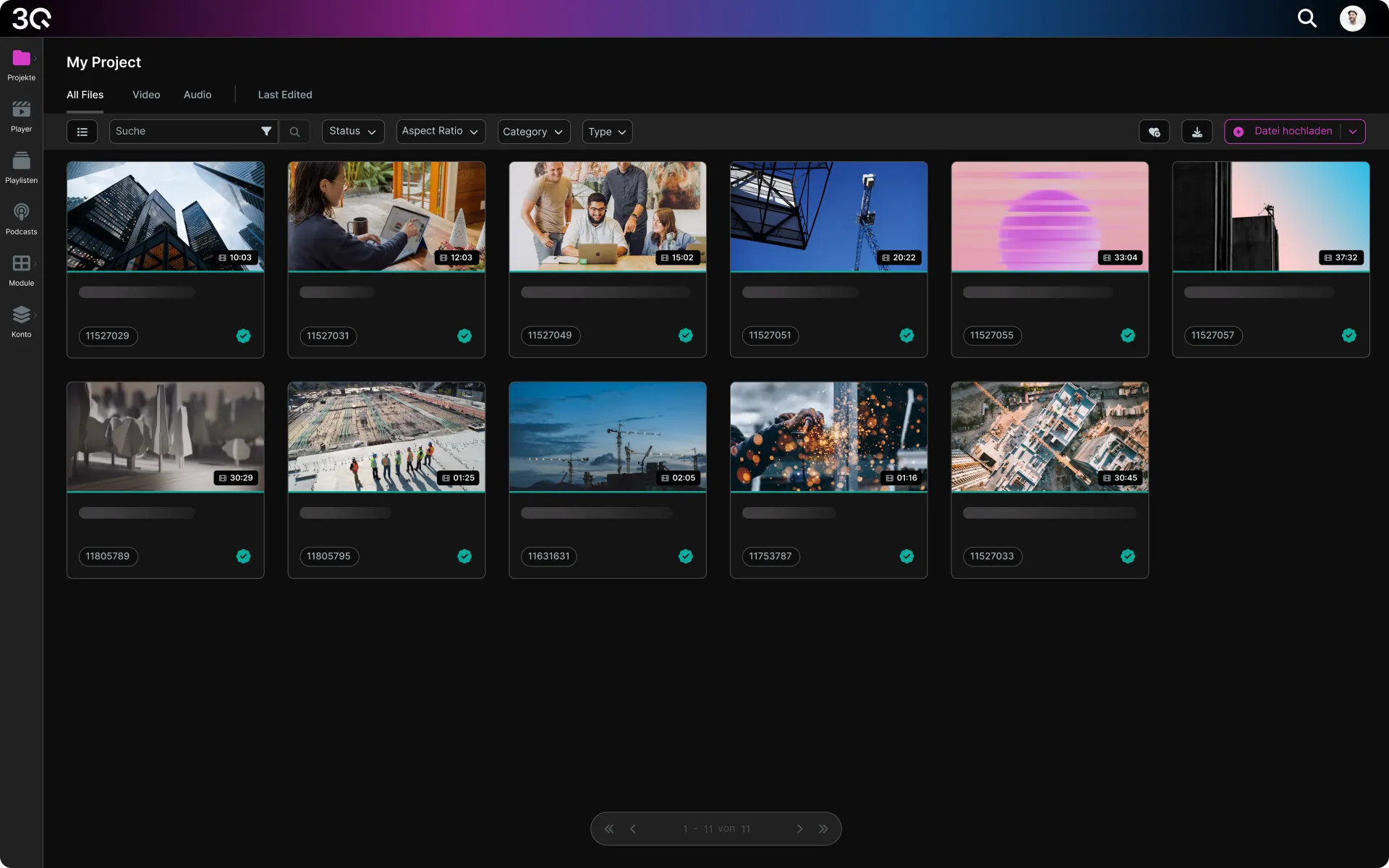
Central platform for videos, podcasts, webcasts, and more.

For accessible embedding, including live chat, surveys, and interaction features.

Automated transcription, subtitling, and
in-depth usage analytics.

Embed accessible streams using iFrame or JavaScript, with CMP support to ensure GDPR–compliant consent.

Define who can access which data and functions.

Scalable for small projects up to large events.

GDPR-compliant, ISO certified.

English customer support, technical advice, onboarding, monitoring & expert help.

Redundant infrastructure physically distributed across Europe. Platform & infrastructure developed in-house, without third-party dependencies.
Most frequently asked questions
The short answer is no. Free platforms rely on advertising, collect user data, and often fail to meet GDPR standards — creating significant risks for public institutions.
Yes. 3Q uses a WCAG-compliant user interface (Web Content Accessibility Guidelines), which enables use by all user groups. This means clear contrasts, intuitive navigation, logical structure, and keyboard control. The integrated accessible video player goes even further: Subtitles can be easily switched on, audio descriptions added, and multilingual audio options provided. The player controls are compatible with assistive technologies, such as screen readers.
The platform allows subtitles, transcripts, audio descriptions, and multilingual audio tracks. The video player is WCAG-compliant, meaning it can also be operated with screen readers and keyboard navigation.
Yes, you can seamlessly integrate live streams and on-demand content into your website or intranet — without exposing your data to advertising networks or third countries.
It uses content delivery networks (CDNs) across Europe, allowing thousands of viewers to access content at the same time without compromising quality or stability.
Editors can upload, organize, and publish videos without any technical obstacles. The interface is clearly structured so that even occasional users can navigate quickly.
Ready to get started?


